
NEIGHBOURHOOD GUIDE
Le Plateau: working at the heart of Abidjan
Seen from the lagoon, its skyline of towers stands out clearly from the rest of the city. Le Plateau is Abidjan's historic business district, a peninsula that has for decades concentrated the city's corporate headquarters, administrations and major institutions. It is the district everyone recognises at a glance, the one that still defines what it means to have a serious address in Abidjan. Here is what still makes it a leading professional address today.
3 min read

-
01
A peninsula built for business
Le Plateau occupies a singular position: a peninsula encircled by the Ébrié Lagoon, linked to neighbouring districts by several bridges. That geography has long supported its role as a compact, easily identifiable nerve centre, where the city's command functions are gathered together. Here stand the towers that shaped Abidjan's skyline, wide avenues designed for the flow of business, and a density of offices unmatched anywhere else in the metropolis. Its tight footprint also makes it a district you can cross easily on foot, from one meeting to the next.
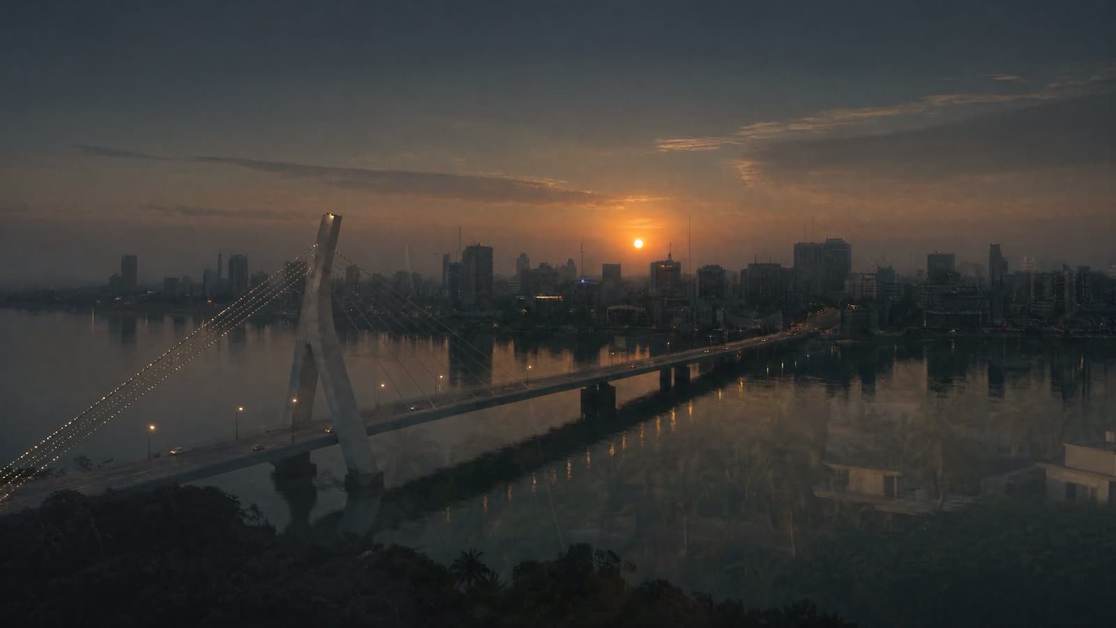
Computer-generated image. The Alassane Ouattara bridge. -
02
The institutional and financial core
Public administrations, corporate headquarters, banks and regional institutions: Le Plateau remains the point where Ivorian economic life converges. Cathédrale Saint-Paul, with its resolutely modern architecture, overlooks the district from the high ground above the port. Around it, ministries, courts and large public squares set the rhythm of a district that lives mainly on weekdays, to the tempo of office hours. The broad boulevards that cross it, laid out for the flow of business, remain the backbone of how people move through it today, from one appointment to the next.
-
03
A district in transformation
Le Plateau is no longer simply a place people leave at six o'clock. New office buildings, better equipped and better connected, keep appearing, driven by steady demand from companies seeking addresses that represent them well. Habits are shifting too: concierge services, tighter security, flexible layouts, everything an organisation needs to project an image equal to its ambitions. This renewal has not erased what came before: colonial-era buildings and contemporary towers still stand side by side, giving the district an unmistakable, layered skyline that keeps changing without losing its character.
-
04
What kind of property you'll find
Le Plateau's offering centres mainly on furnished and unfurnished offices, from a single independent floor to a complete head office, along with a handful of residences aimed at professionals who want to live close to where they work. The quality of technical fit-out (cabling, air conditioning, fire safety, controlled access) is a central criterion here, as is the visibility of the address itself. Immediate proximity to administrations, banks and major firms also weighs heavily in the choice to set up at this address.
-
05
Who Le Plateau suits
Le Plateau suits companies that want an address which speaks for itself before the first meeting even starts: head offices, regional directorates, firms and institutions that need a central, recognised anchor. It is also an option for executives who want to live within easy reach of their workplace. At Tanasa, we know the particulars of this distinctive market, where the address is as much a statement as a place to work, and where every square metre has to serve a precise ambition.